
A particular kind of nutrition advice sounds completely reasonable until you are having one of those weeks. Cook fresh meals, meal prep in advance, eat at regular times, drink enough water, get enough sleep and make sure every meal is balanced. None of those suggestions is inherently bad, but when work is relentless, your sleep is poor, your usual routine has disappeared, and deciding what to make for dinner already feels like one decision too many, another list of things you “should” be doing can quickly make food feel like extra work.
Stress can affect eating in several directions. You might lose interest in food altogether, find yourself eating at very different times, rely more heavily on whatever requires the least effort or notice that certain foods sound much more appealing than usual. Harvard’s Nutrition Source explains how stress can affect appetite, food choices, sleep, and the motivation or time someone has to prepare meals, which is why a stressful week may require a slightly different approach than an ordinary one.
Instead of asking how to maintain your most organised version of healthy eating while everything else is chaotic, a more useful question can be: how can I make feeding myself easier this week?
Give breakfast and lunch a backup plan
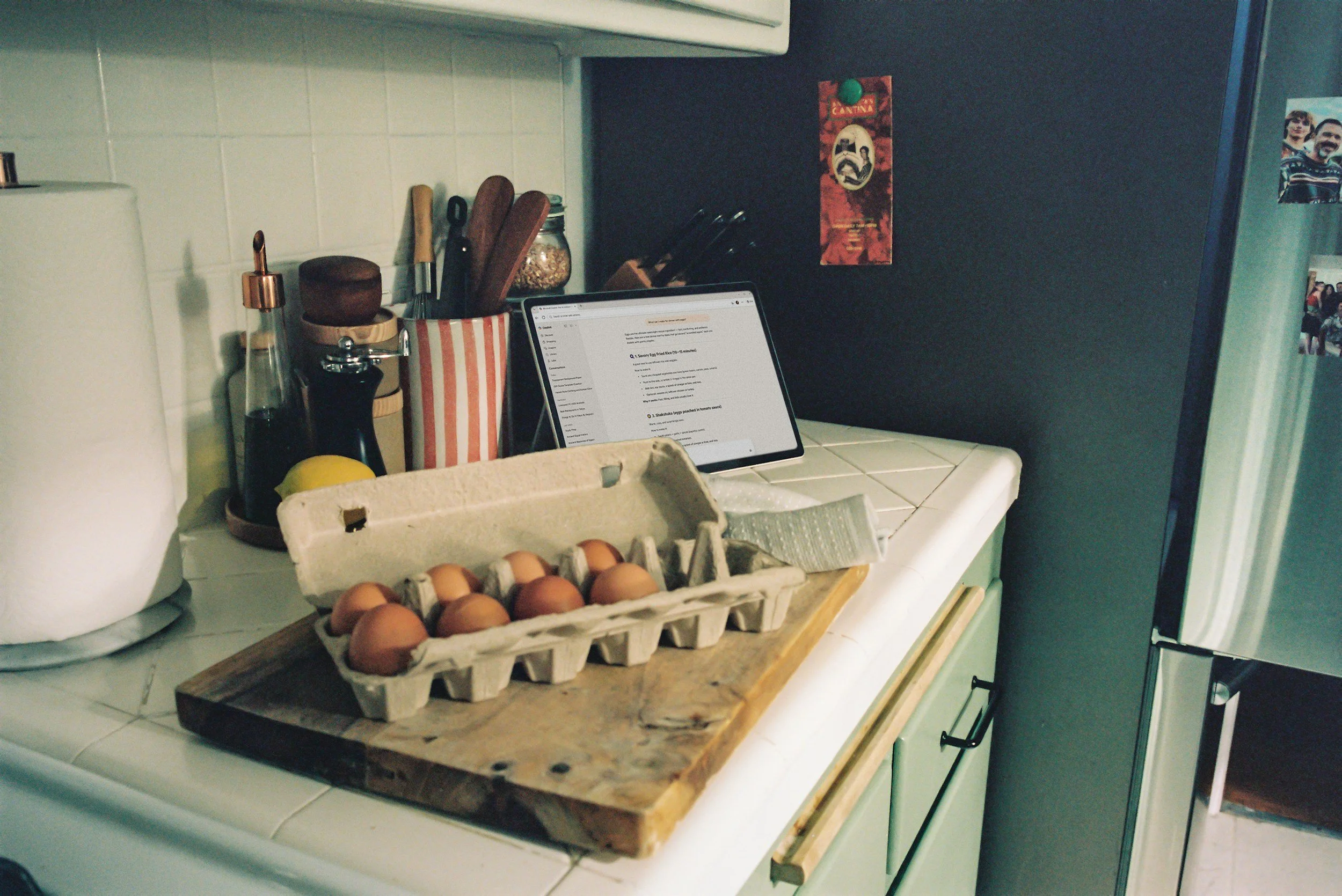
Breakfast and lunch are especially easy to lose when stress changes your day's structure. You might not feel hungry first thing, leave home later than planned or decide to finish one more task before lunch, only to realise several hours later that you still have not eaten.
Rather than creating a more elaborate morning routine, choose one or two breakfasts you can make almost automatically. Yoghurt with fruit and oats, cereal with milk and fruit, eggs on toast, overnight oats or leftovers may all work depending on what you enjoy and what is realistic for you. Breakfast doesn't have to look like traditional breakfast food either; if rice and eggs, soup, a wrap, or something left from dinner is what you actually want to eat, that still counts.
Lunch deserves the same treatment. If your ideal lunch keeps failing because it requires too much prep, the backup needs to be easier, not more impressive. Soup and bread, a sandwich or wrap, leftovers, beans on toast, microwave grains with an easy protein source or something bought ready-made may be more useful than repeatedly waiting for enough time to prepare the lunch you originally imagined.
Long gaps between meals can also change what happens later. Harvard’s Nutrition Source on food cravings notes that going for long periods without eating can contribute to stronger hunger later on, while cravings themselves are influenced by a much wider mix of physiological, behavioural and environmental factors. The point isn't that everybody needs to eat on a strict timetable, but if pushing lunch back consistently leaves you exhausted and ravenous by evening, that pattern is worth noticing.
Build a short list of dinners that still work when you are tired
The question “What do you want for dinner?” becomes surprisingly difficult when you have already spent the entire day making decisions. At that point, a list of five meals you know you will actually eat is more useful than thirty recipes saved on your phone.
Your low-energy dinner list could include eggs or beans on toast, soup with bread and an additional protein source, microwave rice with frozen vegetables and chicken, tofu, fish or beans, pasta with a jarred sauce and whatever vegetables you have available, noodles with frozen vegetables and eggs, a jacket potato with a filling, wraps assembled from ingredients already in the fridge, leftovers or a ready meal.
These meals can and should reflect the food you normally eat at home. A quick dinner might be reheated stew with rice, leftover curry with frozen chapati, couscous with chickpeas, soup, noodles, rice and beans or another familiar meal that happens to be easy to reheat or assemble. Making nutrition realistic should not require replacing culturally familiar food with a completely different “healthy” menu.
If stress kills your appetite, do not wait for perfect hunger
Not everybody eats more when stressed. For some people, stress does the opposite, and food becomes much less appealing. You might know you need to eat but find a large meal overwhelming, or you may become so absorbed in what is happening that you barely notice hunger at all.
If that sounds familiar, waiting until you suddenly feel extremely hungry again may not always be the most useful strategy. You could use another cue: you normally eat lunch around one o’clock, so you still stop around that time and see what feels manageable. Maybe you set a reminder if you genuinely keep losing track of time. You might choose something smaller and easier to eat rather than forcing yourself through a full meal that feels completely unappealing. Yoghurt and fruit, toast with eggs, soup and bread, cereal, a smoothie alongside something to eat, a sandwich or a smaller portion of a familiar meal may feel more approachable than sitting down to a very large plate.
Acute and longer-term stress do not necessarily affect appetite in the same way, and individual responses vary. The Nutrition Source’s overview of stress and eating patterns explains that stress can be linked to both appetite changes and changes in food choices, which is another reason to pay attention to your own pattern rather than assuming a universal response.
If cravings feel stronger, look at the day around them
Cravings can feel incredibly specific. You are not simply hungry; you want chocolate, crisps, biscuits, takeaway or one particular food that will not leave your mind. The temptation is to immediately frame this as a willpower problem, but it happens in isolation.
Think about the day around them.
Did you sleep badly?
Did you eat enough earlier?
Have you gone several hours without food?
Have you spent the entire week telling yourself you are not “allowed” to have the food you now cannot stop thinking about?
Is this food tied to a familiar routine, like having something sweet when you finally sit down after work?
The science around cravings is more complicated than the idea that one craving equals one nutritional deficiency. Habits, food availability, stress, reward, hunger and learned associations can all contribute. Sometimes the useful response might be improving how regularly you eat. Sometimes it may involve loosening unnecessary restriction. Sometimes you might simply decide that you want the food and eat it. Not every craving requires an intervention.
Sleep matters, but the story is more complicated than “poor sleep makes you crave sugar”
Sleep deserves a place in this conversation because stressful weeks and poor sleep often arrive together. However, I would be cautious of oversimplifying the relationship by saying that one poor night automatically makes you crave sugar.
A recent review examining sleep restriction, appetite, and dietary intake found that people sometimes ate more after sleep restriction even when their reported appetite or motivation to eat did not change as researchers expected. In other words, sleep can influence eating, but the mechanisms appear more complicated than a simple hunger-hormone story. If several nights of poor sleep consistently coincide with you eating differently, having less energy to cook or relying more heavily on caffeine, pay attention to the pattern. You do not need to turn sleep into another nutrition rule; it is simply another part of the context.
Let convenience foods do their job
I think convenience foods deserve a little more respect in nutrition conversations. They exist because people do not always have unlimited time, energy, kitchen space or desire to cook. Of course, convenience foods vary enormously in their nutritional content, but that doesn’t mean the category itself should be treated as inherently bad.
Sometimes a microwave meal is the reason you eat dinner.
Sometimes frozen vegetables are the reason vegetables make it onto the plate.
Sometimes pre-cooked rice stops lunch becoming another coffee.
Sometimes buying something ready-made means you can use the energy you do have elsewhere.
Nutrition advice becomes much more useful when it acknowledges that reality. If there is a convenient option you genuinely like and it makes your routine easier, think about what you could pair with it rather than assuming you need to replace it entirely.
A ready-made soup might need bread and a protein source.
You might eat a frozen pizza with vegetables or salad alongside it.
Microwave rice might become part of a bowl with vegetables and beans.
You can build meals based on the level of effort you actually have available.
You do not need to compensate for a stressful week
After several days of eating differently, you may feel a strong urge to “make up for it”. Maybe you've had more takeaway than usual, meals have happened at strange times, or you have eaten foods you normally try to limit. Monday starts approaching, and suddenly you are planning to skip breakfast, cut out snacks or dramatically reduce what you eat. That usually misses the more useful question:
What made the week difficult in the first place?
If food became chaotic because you were exhausted, restriction does not create more energy. If meals disappeared because you had no easy options, buying groceries may help more than stricter food rules. If stress reduced your appetite, trying to eat even less afterwards makes very little sense. Instead of compensation, think about restoration, for example;
Restock a few useful foods
Decide what tomorrow’s lunch will be. Make one easy meal
Put something in the freezer
Get some sleep if you can
Bring back one part of your usual routine
You do not need to repair your entire life over the weekend.
A simple stressful-week food plan
If I were preparing for a particularly busy week, I would not necessarily start with seven completely planned days.
I would make sure I had:
One breakfast I can make half asleep - something familiar that does not require much thought.
One lunch requiring almost no effort - either something already prepared or something I can assemble quickly.
One dinner for when I cannot be bothered - the meal that still works when cooking feels like too much.
Something easy to snack on - particularly useful if meals are likely to be pushed around.
Something in the freezer - your emergency option.
One drink I know I will actually keep up with - whether that is water, sparkling water, tea or something else that helps you stay hydrated.
One convenience food that saves effort - something you genuinely find useful rather than something you think you “should” buy.
One backup option for when the plan falls apart - Because occasionally it will.
No seven-day perfect meal plan required, just give future-you a few easier options.
When life feels all over the place, start smaller
Stress has a way of making everything feel as though it needs fixing at once. Your sleep needs work, your meals need sorting out, your fridge is empty, your routine has disappeared, and now you are somehow meant to transform it all before Monday morning.
You do not have to; sometimes the most useful question is: What would make eating 10% easier this week?
Perhaps the answer is buying breakfast foods you can actually grab quickly. Maybe it is preparing one lunch in advance, putting something in the freezer, or accepting that ready-made food will be useful for a few days. Ten per cent easier still counts.
Make your next stressful week a little easier
If stress has disrupted your meals, sleep, energy, or usual routine, the Reset Ritual Sheet can help you pause and figure out what needs your attention instead of trying to overhaul everything at once. It gives you a simple space to notice what has changed, decide what would make the next few days more manageable and choose a few realistic things to focus on.
You can use it alongside the ideas in this article to work out which part of your routine needs making easier first.
Eating well still has to work in real life
Nutrition can support you during stressful periods, but it shouldn't become another source of stress. Some weeks you'll cook more; others, the freezer will do most of the work. Some days meals are beautifully balanced; other days the most useful thing you can do is make sure you eat something rather than keep pushing food back.
That variation is part of real life. The aim isn't to build a nutrition routine that only works when you are rested, organised, and motivated. A useful routine also needs enough flexibility to support the version of you who is tired, busy, stressed, or simply doesn’t feel like cooking. Sometimes eating well means preparing something fresh. Sometimes it means reheating yesterday’s dinner. And sometimes it means opening the freezer and being extremely grateful that past-you thought ahead.
What is the one food or meal that makes eating easier for you during a stressful week?
If you enjoy practical nutrition that works around real life, you can also join Alafia Circle, Nutriten’s weekly email community, for more realistic conversations about food, health, and everyday routines.
Stay happy, stay healthy, stay you!
For more on the connection between stress and eating, read Can Stress Raise Your Blood Sugar?