What Is Nutrition? Beyond Calories and Dieting
If you have ever tried to “eat better” and somehow ended up more confused than when you started, you are not alone. Nutrition is often presented as a set of numbers to manage: calories, macros, points, portions, steps, grams of protein. Those numbers can be useful in the right context, but when they become the whole conversation, it is easy to forget what nutrition is actually about.
Food does more than provide calories. It gives your body the raw materials it needs to produce energy, maintain muscle, support digestion, make hormones and enzymes, transport oxygen, maintain bones, and carry out thousands of processes without you ever needing to think about them. That is why two meals with similar calorie counts can have very different nutritional profiles, and why eating “within your calories” doesn't automatically tell you whether your diet is varied, nourishing, or appropriate for your needs.
At Nutriten, we think understanding nutrition should make food feel less confusing, not give you another set of rules to follow. This guide will help you understand what nutrition actually means, what calories can and cannot tell you, and what to pay attention to when you want to nourish yourself beyond the numbers.
Quick answer
Nutrition is the process through which your body takes in food, digests and absorbs its nutrients, and uses them for energy, growth, repair and normal body function.
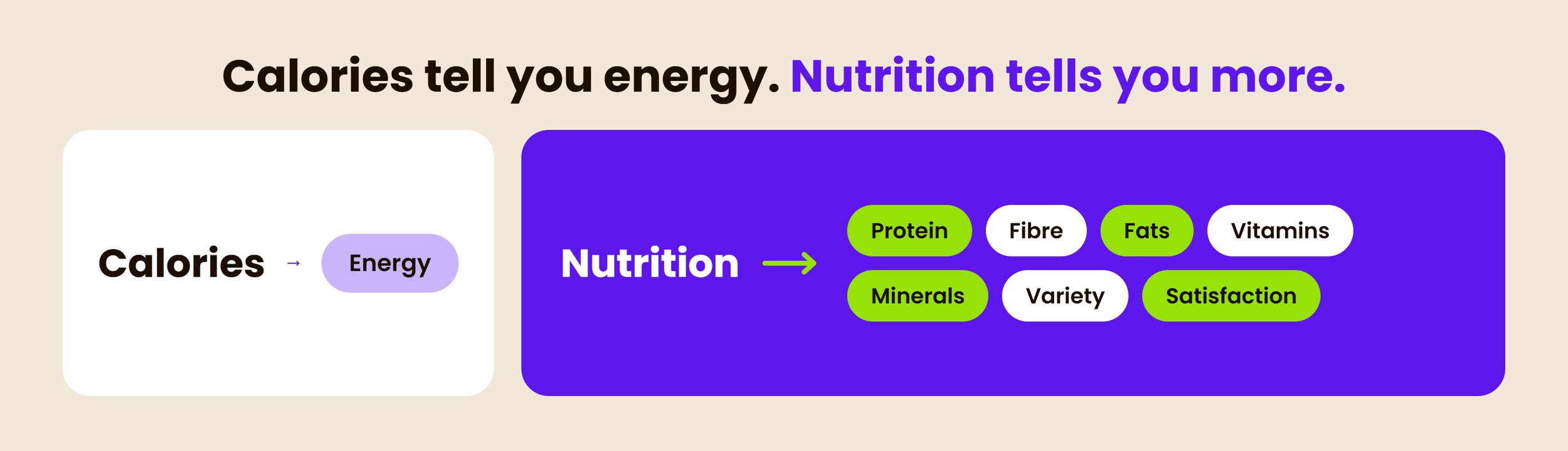
Calories are part of that picture because they measure energy, but they do not tell you everything about a food. Protein, carbohydrates, fats, fibre, vitamins, minerals and other compounds all have different roles, which is why good nutrition is about the overall quality, variety and adequacy of your eating pattern, not one number on a label. The World Health Organisation (WHO) describes healthy diets through four broad principles: adequacy, balance, moderation and diversity.
So what is nutrition?
In simple terms, nutrition is what happens when your body takes the food you eat and turns it into something useful. That process begins with eating and digestion, but it continues long after the meal is finished. Nutrients are absorbed, transported and used throughout the body to support everything from movement and concentration to immune function and tissue repair.
This includes the three main macronutrients, carbohydrate, protein and fat, as well as fibre, vitamins, minerals and water. Different nutrients have different jobs, and most foods provide more than one. A bowl of porridge, for example, is not simply “X number of calories”. It can provide carbohydrate for energy, fibre for digestive health, protein, B vitamins, minerals and, depending on what you add to it, fats, fruit and additional nutrients too.
Nutrition becomes much easier to understand when we stop asking only:
“How many calories are in this?”
and start asking:
“What is this food contributing?”
Calories matter, but they answer only one question
A calorie is a unit of energy. Your body needs energy around the clock: to breathe, maintain circulation, think, move, digest food and keep your organs functioning. NHS guidance explains that calories measure the energy in food and drink, and that your body uses that energy for basic functions, movement and digestion.
Calories aren't meaningless, and you don't need to fear them; they tell us how much energy a food provides. What they don't tell us is how much protein, fibre, iron, calcium, or vitamin C a food contains, whether it contributes meaningfully to your overall dietary variety, or whether it fits your individual needs. That is why a food label contains much more than the calorie number. UK nutrition labels also give information about nutrients such as fat, carbohydrate, sugars, protein and salt.
Think of calories as one piece of information, rather than the final verdict on a food.
What do nutrients actually do?
This is where the conversation becomes much more useful for everyone.
Carbohydrates provide energy
Carbohydrate-containing foods are an important energy source for the body. They include foods such as bread, potatoes, fruit, grains, noodles, oats, pulses and rice. WHO guidance recommends that carbohydrates come primarily from sources such as wholegrains, vegetables, fruit and pulses where possible because these foods can provide fibre and other nutrients alongside energy. That does not mean every carbohydrate needs to be wholegrain or that refined carbohydrates have no place in your diet; it just means the source and overall dietary pattern matter too.
Protein provides building blocks
Protein supplies amino acids that the body uses to build and maintain tissues and to produce functional molecules such as enzymes and hormones. Protein can come from many foods, including fish, eggs, yoghurt, poultry, tofu, tempeh, beans, lentils, nuts and seeds. It is important, but it does not need to dominate every meal or come wrapped in packaging that says “high protein”.
Fat has important jobs too
Fat is sometimes talked about as something to minimise, but dietary fat is essential because it supports cell function and helps the body absorb the fat-soluble vitamins A, D, E and K. Certain fatty acids also need to come from the diet. WHO recommends favouring unsaturated fats from foods such as nuts, seeds, fish, avocado and plant oils over saturated and trans fats where possible.
Fibre deserves more attention
Fibre supports digestive health and normal bowel function, and fibre-rich dietary patterns are associated with broader health benefits. It comes from plant foods including vegetables, fruit, beans, lentils, wholegrains, nuts and seeds. Rather than treating fibre as another number to chase, think about variety. Could you add another vegetable? Use beans in a meal? Have fruit with breakfast? Try a different wholegrain? Small additions can make a meaningful difference over time.
Two meals can have similar calories and still be nutritionally different
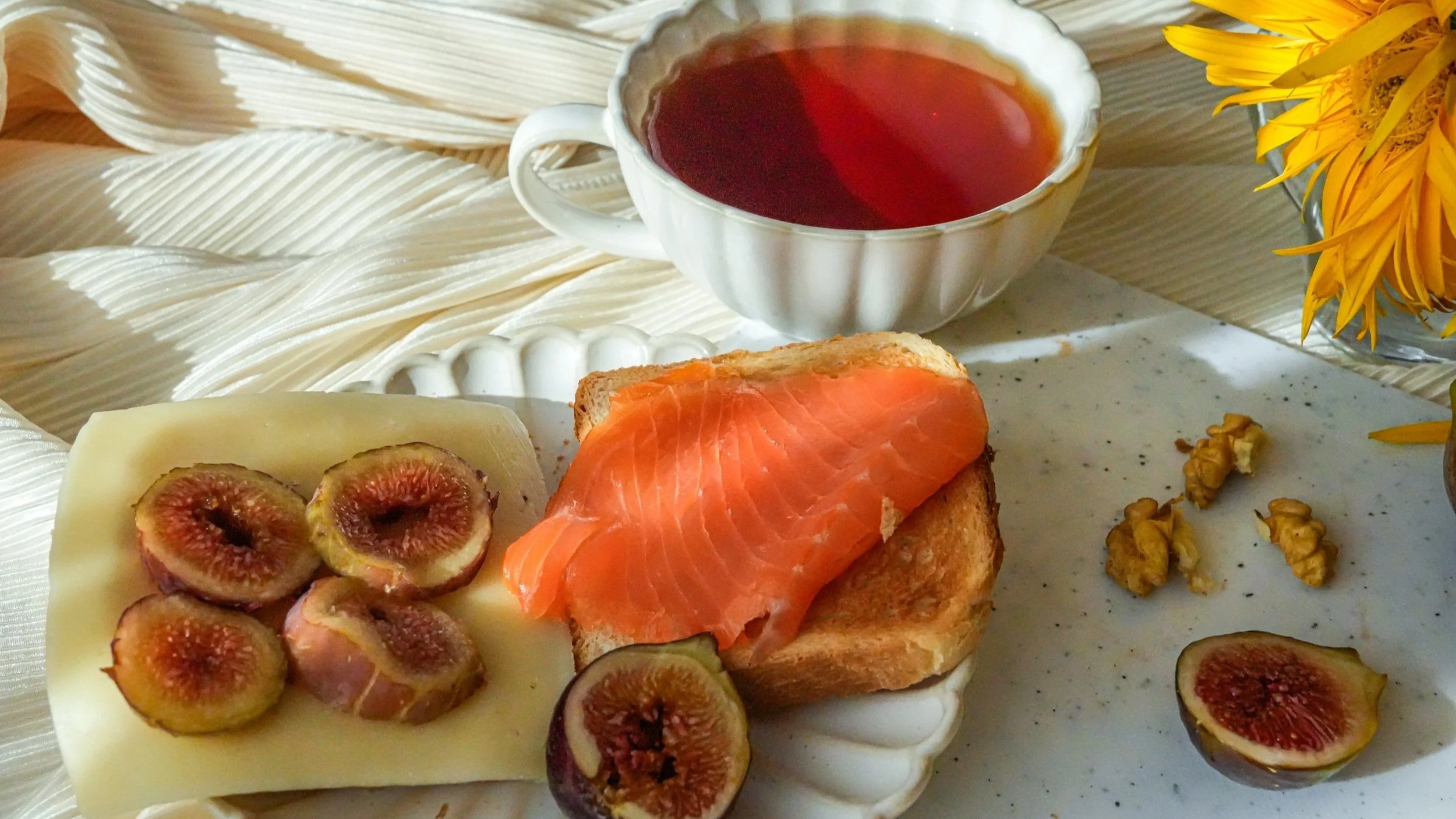
This is one of the easiest ways to understand why nutrition cannot be reduced to energy alone. Imagine two lunches contain roughly the same number of calories. One might contain a grain, vegetables, a protein source and some dietary fat; another might provide a similar amount of energy but contain very little fibre, protein or micronutrient variety. Neither meal becomes morally “good” or “bad”, but nutritionally, they are not identical. One may provide more protein; another may contain more fibre; one may provide more calcium or iron; one might keep you personally satisfied for longer. Calories alone cannot show those differences. That is why the question “Which one has fewer calories?” isn’t always the most useful nutrition question. Sometimes a better question is: “Which one gives me more of what I need right now?”
Nutrition also happens in context
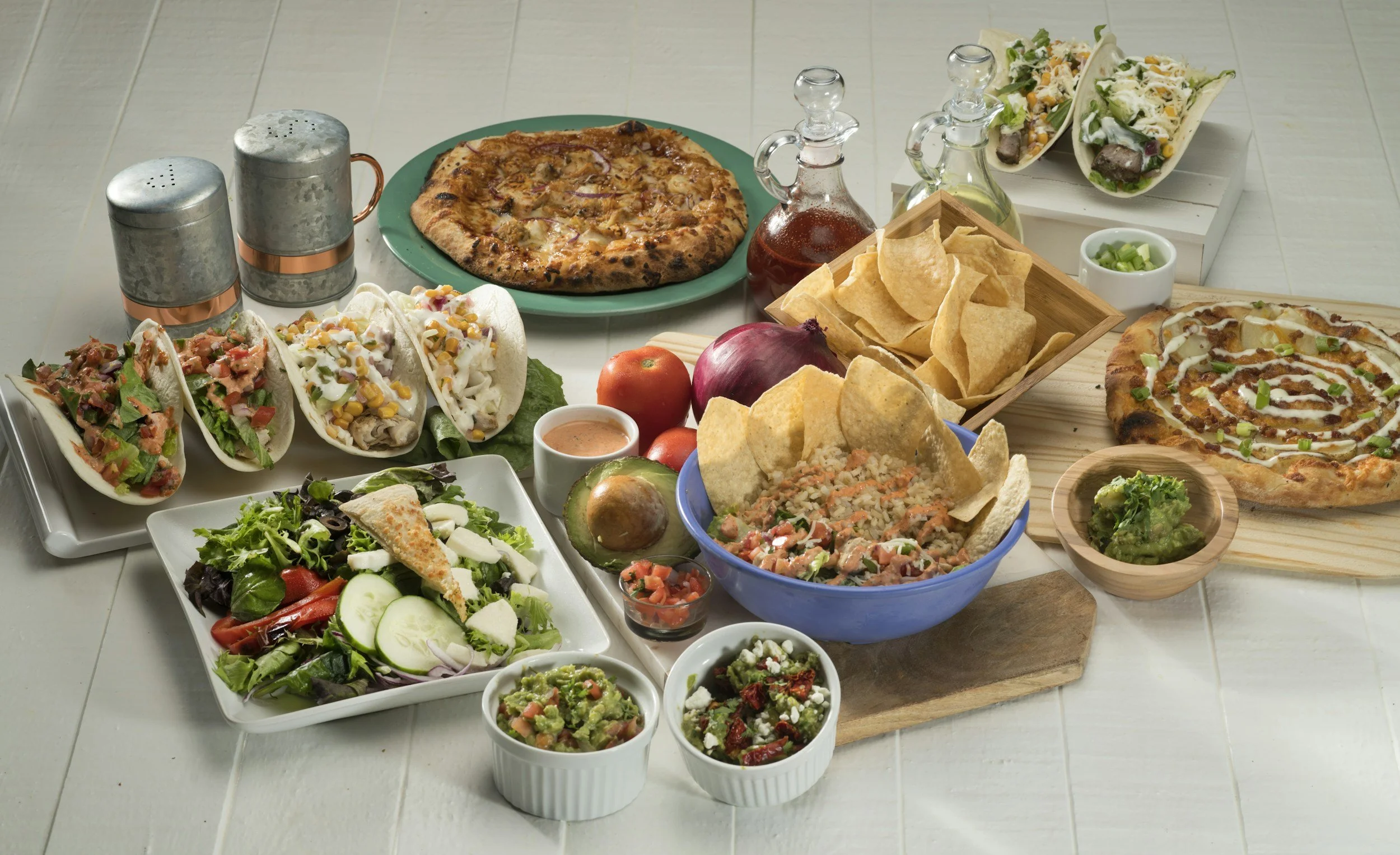
Food does not exist in isolation from the rest of your life. A meal may be nutritionally impressive on paper, but if it is unaffordable, takes two hours to prepare, contains foods you dislike or requires you to abandon the foods you grew up eating, it may not be useful or convenient to you. WHO notes that the exact composition of a healthy diet varies based on factors including individual needs, lifestyle, cultural context, locally available foods, and dietary customs and this significantly matters. Nutrition can look like a lentil stew, a salmon sandwich, noodles with tofu, couscous with vegetables, a jacket potato, soup and bread, or leftovers from last night. Healthy eating doesn't become more valid just because it looks like a wellness advert.
Nutrition is not the same as dieting.
This distinction matters because people often treat the two as interchangeable. Dieting usually means intentionally changing your food intake, often with body weight as the main goal. Nutrition is much broader and asks questions such as:
Are you getting enough energy?
Is your diet varied enough?
Are you regularly getting protein and fibre?
Do certain nutrients need more attention?
Does the way you eat support your health and lifestyle?
Can you actually sustain it?
You can care about nutrition without being on a diet; you can improve the nutritional quality of your meals without counting every calorie, and you can make supportive changes without turning foods into a list of things you are “allowed” and “not allowed” to eat.
Where people often get stuck
The difficulty is that nutrition information can easily become another form of perfectionism.
You learn that protein matters, so suddenly every product needs extra protein. You learn that fibre matters, so now you feel pressure to reach a perfect number immediately. You hear that wholegrains can be beneficial and start worrying every time you eat white rice or bread, but that is not the point. Nutrition knowledge should give you more options, not fewer.
Instead of thinking:
“I need to completely change this meal.”
try:
“Is there anything useful I could add?”
Maybe the meal would benefit from some protein; maybe you have barely eaten any plants today and adding vegetables would be helpful; or maybe the meal is already satisfying and varied enough, and nothing needs changing.
Put it into practice: look beyond the calorie number
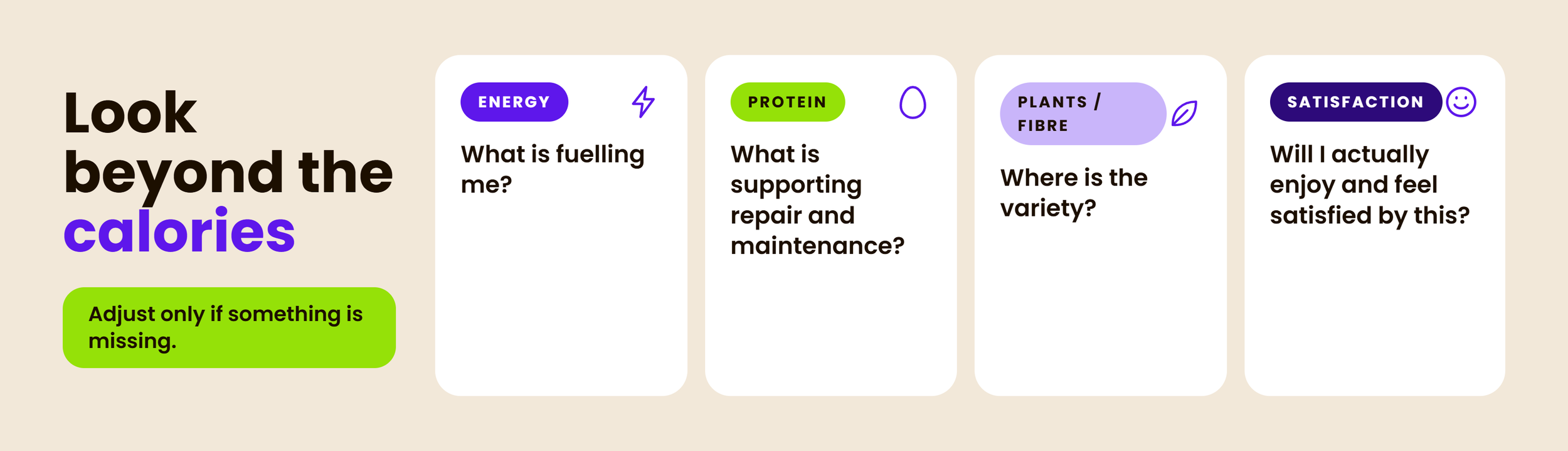
For your next three meals, do not calculate anything. Instead, look at what is there and ask four questions.
1. What is giving me energy?
Usually, this includes carbohydrate-containing foods and fats.
2. Where is the protein?
It could be eggs, yoghurt, fish, tofu, meat, beans, lentils or another protein-rich food.
3. Where is the fibre or plant variety?
Look for vegetables, fruit, beans, wholegrains, nuts or seeds.
4. Is this meal actually satisfying?
Nutrition still has to work in real life; taste, texture, familiarity, convenience and enjoyment matter because you need to actually want to eat the food.
Then leave it there because you don’t need to score the meal; you are just learning to see more than the number.
Want help spotting nutrition myths?
If nutrition advice online sometimes leaves you wondering what is actually worth listening to, download the free Nutriten Nutrition Myth Guide. It will help you question extreme claims, recognise common nutrition myths, and know what to look for before changing how you eat.
Your takeaway
Calories matter because your body needs energy, but calories are only one part of nutrition.
Food also provides protein, carbohydrates, fats, fibre, vitamins, minerals and other compounds that support how your body functions. The overall variety and adequacy of your diet matter too, which is why both NHS and WHO healthy-eating guidance look beyond calories alone.
The useful shift is not from “calories are important” to “calories do not matter”.
It is from:
“How many calories does this have?”
to:
“What else is this food giving me?”
That question leaves room for much more useful nutrition decisions; maybe you need more protein or your diet could use more fibre, maybe you need more overall food because your energy has been low, or the meal already works perfectly well for you - the goal is not to inspect everything you eat; it is to understand food well enough that numbers become information, rather than rules.
Want to join the Alafia Circle?
If you enjoy nutrition conversations that help you understand why something matters and, more importantly, how to apply it in real life, join the Alafia Circle, Nutriten’s free email community.
You’ll get practical nutrition education, simple ideas and gentle reminders that taking care of yourself doesn’t require perfection.
Stay happy, stay healthy, stay you!
This article provides general nutrition education and does not replace personalised medical or dietetic advice. If you have a medical condition, are pregnant, take medication, have specific dietary requirements or are concerned about your relationship with food, speak with an appropriately qualified healthcare professional.