If you have ever decided that you are going to “eat healthier” and immediately felt like you needed to clear out your cupboards, meal prep every Sunday and suddenly become a completely different person, you are not alone.
Healthy eating has become unnecessarily complicated. We are constantly being introduced to new rules about what to eat, what not to eat, when to eat and which ingredient is apparently responsible for all our problems this week. It is no surprise that something as normal as eating can start to feel overwhelming.
At Nutriten, we believe a balanced diet should support your life, not restrict it. That means looking beyond the idea of a perfect plate and thinking instead about the bigger picture. Are your meals giving you enough energy? Are you getting a reasonable variety of foods? Do you feel satisfied after eating? Can you enjoy foods that connect you to your culture, family and everyday life without feeling as though you have somehow failed at being healthy? These questions tell us far more about sustainable nutrition than whether your lunch looks Instagram-ready.
So, if you are trying to understand what a balanced diet actually looks like, this guide will help you cut through the noise and build an approach you can realistically return to again and again.

Quick answer
A balanced diet does not mean eating perfectly at every meal. It means getting a good variety of carbohydrates, protein, healthy fats, fibre, fruit, and vegetables across your overall eating pattern. The easiest way to start is to build on the meals you already enjoy, add what may be missing, and focus on small changes you can repeat consistently.
What is a balanced diet?
A balanced diet is a way of eating that provides your body with a variety of nutrients over time, including carbohydrates, protein, fats, fibre, vitamins and minerals.
The keyword here is over time. One of the easiest traps is believing every meal needs to be nutritionally perfect, when in reality, balance comes from your overall eating pattern. The NHS Eatwell Guide, for example, encourages people to think about food balance across a day or even a week rather than trying to make every individual meal look exactly the same. You might have a rushed breakfast before work, a simple lunch between meetings and a more substantial dinner later on. Another day might look completely different. What matters most is not whether every plate contains the perfect combination of nutrients, but whether your eating habits regularly give your body a good mixture of foods.
Instead of asking yourself, “Was this meal healthy enough?”, it's often more useful to ask, “What does the bigger picture of my eating look like?” This is where balance begins.
Healthy eating does not have one look
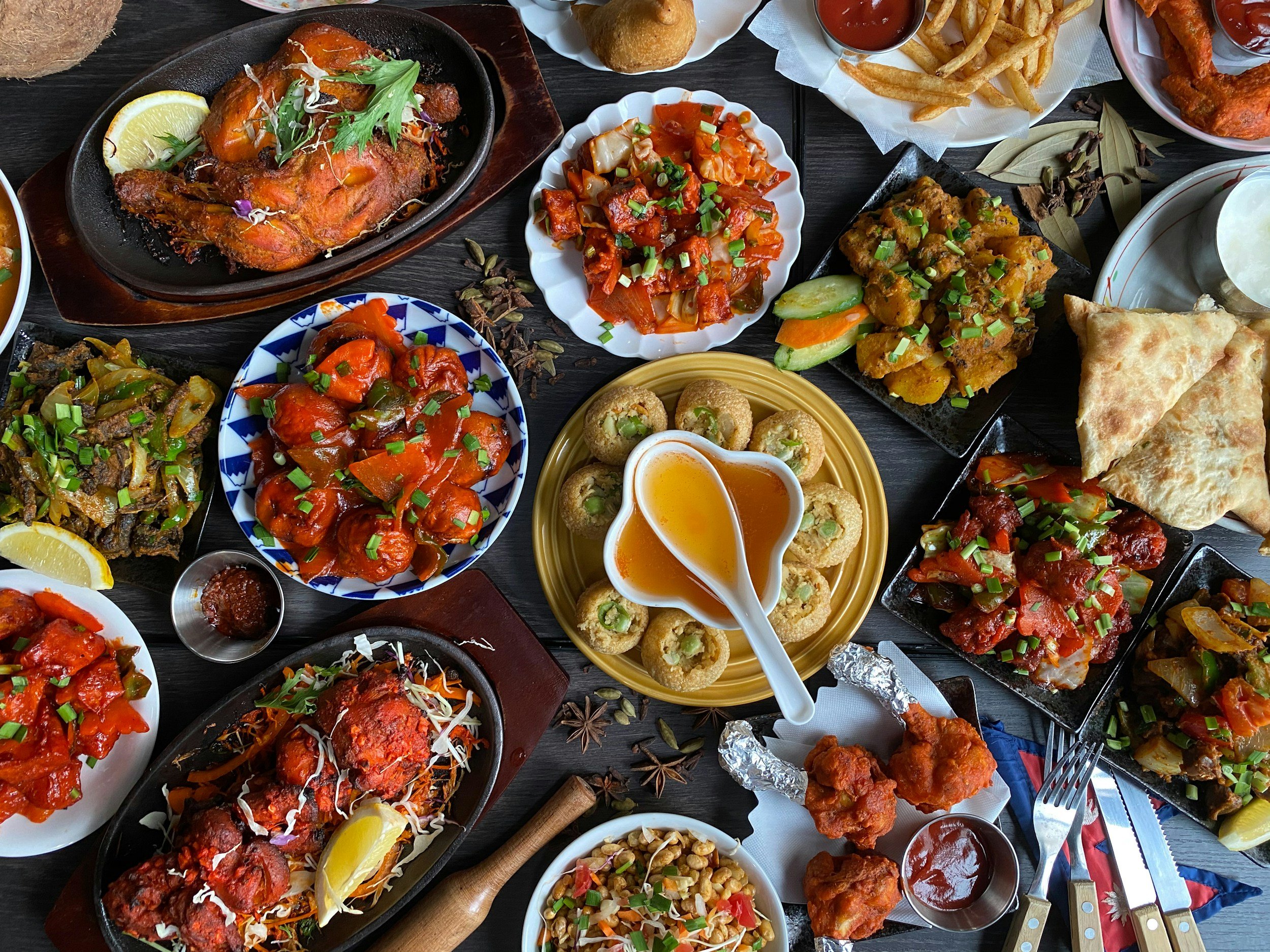
One reason healthy eating can feel disconnected from real life is that we are repeatedly shown the same narrow version: a plate of grilled chicken, broccoli, brown rice, and perhaps an avocado on the side. That meal is fine, but it is not the universal definition of health or healthy eating.
A nourishing meal could just as easily be rice and peas with fish and vegetables, dhal with rice and sabzi, jollof rice with chicken and salad, tofu with noodles and stir-fried vegetables, beans with tortillas and avocado, pasta with lentils and tomato sauce, or a jacket potato topped with tuna and sweetcorn. Food carries much more than nutrients; it carries family, culture, memories, comfort, and identity, and those things don't suddenly become irrelevant when you decide to look after your health.
You shouldn't have to disconnect from the foods that feel familiar to you to eat well. In many cases, a more useful approach is to keep the meals you already enjoy and build around them.
Before you remove something, ask what you could add
When people decide to improve their diet, the first instinct is often restriction. They cut out carbohydrates, stop eating certain snacks, remove sugar, avoid eating after a certain time, or start building a growing list of foods they believe they “shouldn't” have. Sometimes dietary changes are necessary for medical or personal reasons, but for everyday healthy eating, constantly focusing on what to remove can make food feel much more complicated than it needs to be.
Try a different approach: look at what is already on your plate and ask, “What could I add that would make this meal more nourishing or satisfying?”
If you usually have toast for breakfast, add eggs, yoghurt, nut butter, or fruit.
If lunch is instant noodles because you only have ten minutes, you might add some frozen vegetables and an egg or tofu.
If dinner is rice with curry, you could add another vegetable, beans or lentils depending on what is already in the dish.
Nothing big has changed in any of those examples; you have not started a new diet or thrown away foods you enjoy; you have simply added something that helps the meal provide a little more. This is one of the easiest nutrition habits to start because it works with your current lifestyle rather than demanding you create a new one.
Try this today
Look at one meal you eat regularly and ask yourself three questions:
Where is my source of protein?
Is there any fruit or vegetable here?
What could I add to keep me satisfied longer?
You do not need to change all three things. Choose the easiest improvement and start there.
Carbohydrates can be part of a balanced diet
Carbohydrates are probably one of the most misunderstood parts of nutrition. Foods such as rice, bread, pasta, potatoes, plantain, yam, oats and noodles are sometimes treated as though eating them automatically makes a diet unhealthy. In reality, carbohydrate-containing foods are an important energy source, and many also provide fibre, vitamins, and minerals. Where possible, including higher-fibre options such as wholegrains, pulses, fruit and vegetables can be beneficial, but that does not mean every carbohydrate you eat needs to be wholegrain or that traditional refined grains suddenly become “bad”.
This is where the wider meal matters; white rice served with beans, vegetables and fish offers a different combination of nutrients than rice alone, bread with eggs and tomatoes becomes a more substantial meal than bread by itself, plantain alongside beans, vegetables and a source of protein can form part of a balanced plate.
Rather than fearing individual foods, start looking at what you eat them with. This way of thinking allows you to improve the overall quality of your meals without turning food into a constant list of rules.
Protein matters, but it does not need to take over your diet
Protein has become one of the loudest conversations in nutrition, and although it is an important nutrient, the amount of attention it receives can sometimes make healthy eating seem far more complicated and expensive than it really is. Protein helps maintain and repair body tissues, and regularly including protein-rich foods can make meals more satisfying.
However, you don't need to rely on protein bars, powders, or products labelled “high protein” to build a balanced diet. Foods such as beans, lentils, chickpeas, eggs, fish, meat, tofu, tempeh, yoghurt, nuts, and seeds can all contribute protein; meaning your dhal, rice and peas, and eggs on toast count to your protein intake.
It's useful to remember that many nutritious foods existed long before they became wellness trends.
The nutrient many of us could pay more attention to: fibre
While protein dominates many nutrition conversations, fibre deserves more attention - and is starting to get it! Fibre is found in plant foods such as fruit, vegetables, beans, lentils, wholegrains, nuts and seeds, and it plays an important role in digestive health and normal bowel function.
Rather than worrying about hitting a perfect number right away, a practical place to start is simply increasing the variety of plant foods you eat. That could mean adding beans to a chilli, keeping frozen vegetables on hand, having a piece of fruit with breakfast, using oats more often, or adding lentils to a soup or curry. If you currently eat very little fibre, increasing it gradually and drinking enough fluid is usually more comfortable than making a sudden dramatic change. This is another example of why small adjustments tend to work better than complete diet overhauls.
Convenience does not cancel out nutrition
A realistic approach to healthy eating also needs to acknowledge something very simple: people are busy. You may be working long hours, studying, commuting, caring for children or relatives, running a household, dealing with stress or simply having a day where cooking feels like the last thing you want to do.
That is why convenience foods like frozen vegetables, microwave rice, tinned fish, canned beans, pre-cooked grains, bagged salads, pre-cut vegetables and some ready meals can absolutely have a place in a balanced diet; they all help you put food together without starting from scratch.
There is no nutritional prize for making every meal from raw ingredients; sometimes the meal that supports you best is the one you can actually prepare. A bowl of microwave rice with tinned mackerel and frozen vegetables may not look glamorous, but it can still provide carbohydrates, protein, fats, and vegetables in minutes.
Practical nutrition is about working with the life you have, not the imaginary life with unlimited time and energy.
A simple way to build a balanced meal
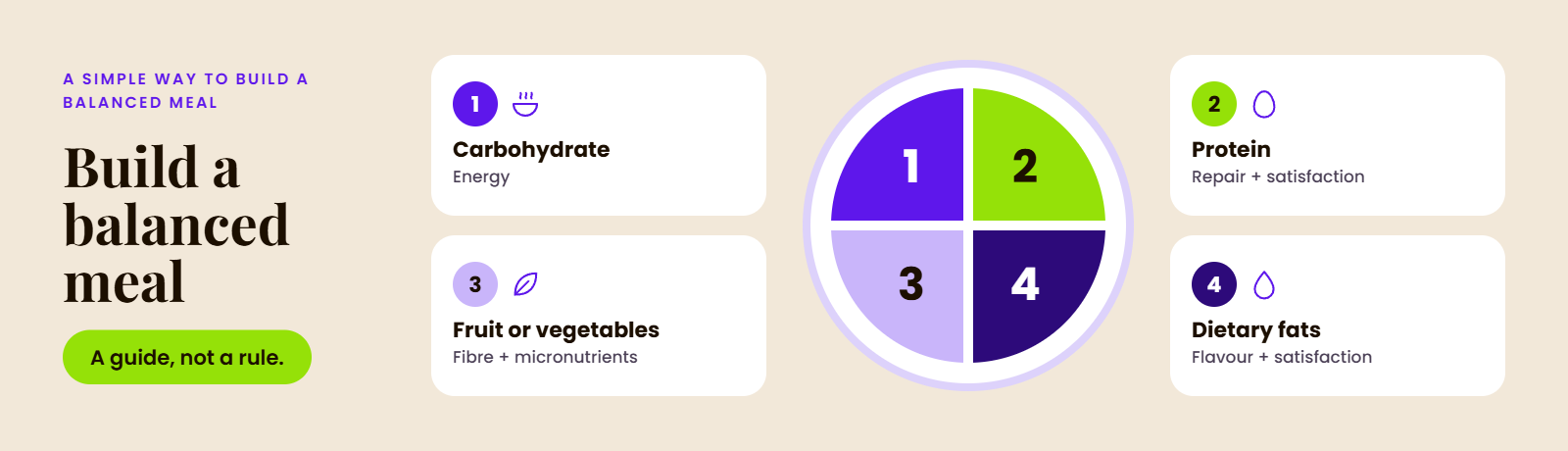
If you want one practical takeaway from this article, remember this framework. When you are putting together a main meal, think about these four areas rather than trying to follow a rigid meal plan.
1. Start with a carbohydrate
This might be rice, potatoes, pasta, bread, oats, noodles, couscous, plantain, yam, roti or another grain or starchy food you enjoy. This gives the meal energy and often forms the familiar foundation of the foods we already eat.
2. Add a source of protein
Think beans, lentils, eggs, fish, meat, tofu, tempeh, yoghurt or another protein-rich food that works for you. You do not need an enormous amount at every meal; you are simply looking for a source that makes the meal more complete.
3. Bring in fruit or vegetables
Fresh, frozen and tinned options can all be useful. You might add vegetables directly into a curry or stew, have salad alongside your meal, throw frozen vegetables into rice or noodles, or have fruit afterwards. The easiest option is often the best option.
4. Include some dietary fat
Fat may already be present in the food or cooking method, so you don't always need to add more. Sources can include cooking oils, avocado, nuts, seeds, olives, oily fish and other foods.
The aim is not to inspect every plate and tick four boxes before you are allowed to eat. Instead, use this framework when you need help answering, “What could make this meal feel a little more balanced?”
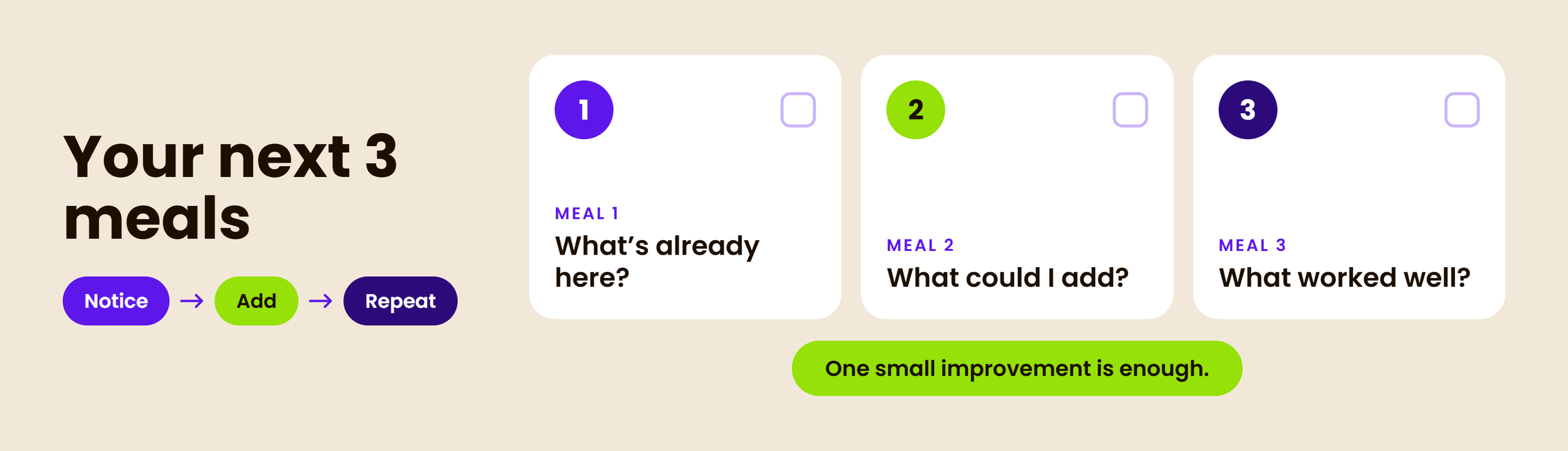
Put it into practice: your next three meals
Information only becomes useful when you can actually do something with it. Instead of finishing this article and telling yourself you need to completely transform your diet, try this exercise over your next three main meals.
Notice what you are already eating without judging it.
Then choose one addition.
Perhaps lunch needs a little more protein, dinner could use some vegetables, or breakfast might keep you fuller if you added yoghurt, eggs or nut butter.
Make the easiest improvement available to you and leave it there. By the third meal, you will already have started practising balanced eating rather than simply reading about it; that difference matters.
What if your eating has felt completely out of rhythm?
Sometimes the issue is not that you don’t know what a balanced diet looks like; you probably already know more about nutrition than you give yourself credit for. The harder part can be putting that knowledge into practice when life gets busy. Perhaps your meal routine has disappeared, you are reaching for whatever is quickest, your water bottle has been sitting untouched on the desk, or you have simply spent so much time looking after everything else that your own habits have moved further down the list.
When that happens, it can be tempting to respond with something extreme: a detox, a strict plan or the promise that everything will change from Monday. At Nutriten, we prefer a gentler approach; a reset does not need to mean punishment. Sometimes it simply means creating enough space to notice what has slipped and intentionally returning to the habits that help you feel more supported; that is the thinking behind our 7 Day Reset Balance.
Rather than chasing perfection for a week, the idea is to reconnect with the foundations of wellbeing and give yourself a manageable structure for getting back into rhythm. If you have been thinking, “I know what I should be doing; I just need help actually doing it again”, this can be a useful place to begin.
Your balanced diet does not need to look like anybody else's
Perhaps the biggest shift you can make is to stop treating healthy eating as something you need to perform correctly. A balanced diet should fit alongside birthdays, long workdays, cultural celebrations, Sunday dinners, restaurant meals, comfort foods, and weeks when you simply have less energy.
The World Health Organisation recognises that the exact makeup of a healthy diet can vary by individual needs, lifestyle, cultural context, and locally available foods. That matters because no single plate represents health for everyone. The goal is not to eat perfectly; it is to build enough awareness to notice how you eat, what might be missing, and to make a supportive choice without turning it into another source of pressure.
Maybe that means adding vegetables to dinner more often; eating breakfast instead of running on coffee until lunchtime; buying the convenient foods that make eating properly on busy days easier; or allowing yourself to enjoy rice, bread or the foods you grew up eating without attaching guilt to them.
Those changes might sound small, but repeated small choices build a sustainable way of eating.
Your takeaway
If you remember nothing else from this article, remember these five things:
Look at your overall pattern, not one individual meal.
Add before automatically taking foods away.
Build meals around carbohydrate, protein, fruit or vegetables and dietary fats where practical.
Let convenience help you, rather than making you feel guilty about using it.
Choose one realistic change you can repeat before trying to change everything.
You do not need to overhaul your life to start eating in a way that supports you. Start with your next meal and look at what is already there, decide what might make it a little more nourishing and make the smallest change that feels realistic; then do it again when you can. That is balance in practice!
Want Nutriten in your corner?
If you enjoy nutrition conversations that help you understand why something matters and, more importantly, how to apply it in real life, join the Nutriten email community.
We share practical nutrition education, simple ideas you can actually use and gentle reminders that taking care of yourself doesn’t require perfection. If you want a little more structure to help you put these ideas into practice, start with our 7 Day Reset Balance.
Stay happy, stay healthy, stay you!
This article is for general educational purposes and does not replace personalised medical or nutritional advice. If you have a medical condition, take medication, are pregnant, or have specific dietary requirements, speak with an appropriately qualified healthcare professional.